The Store at Dupont and Dufferin
Start with a boy sitting on a stool behind a cash register.
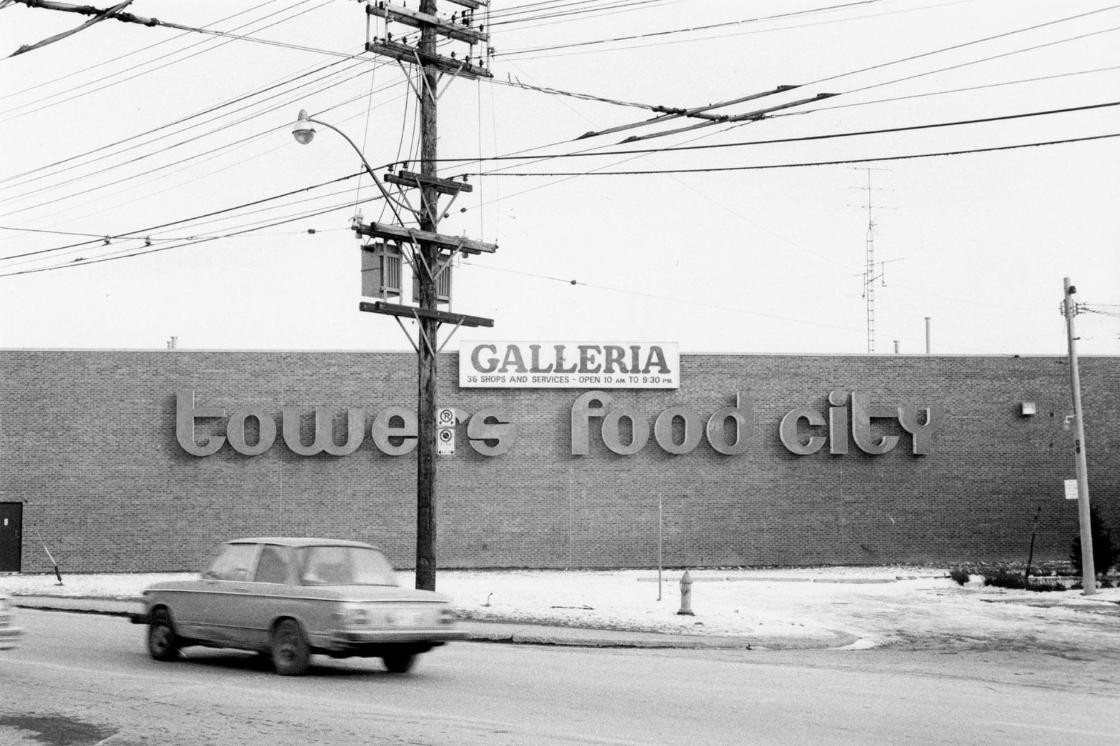
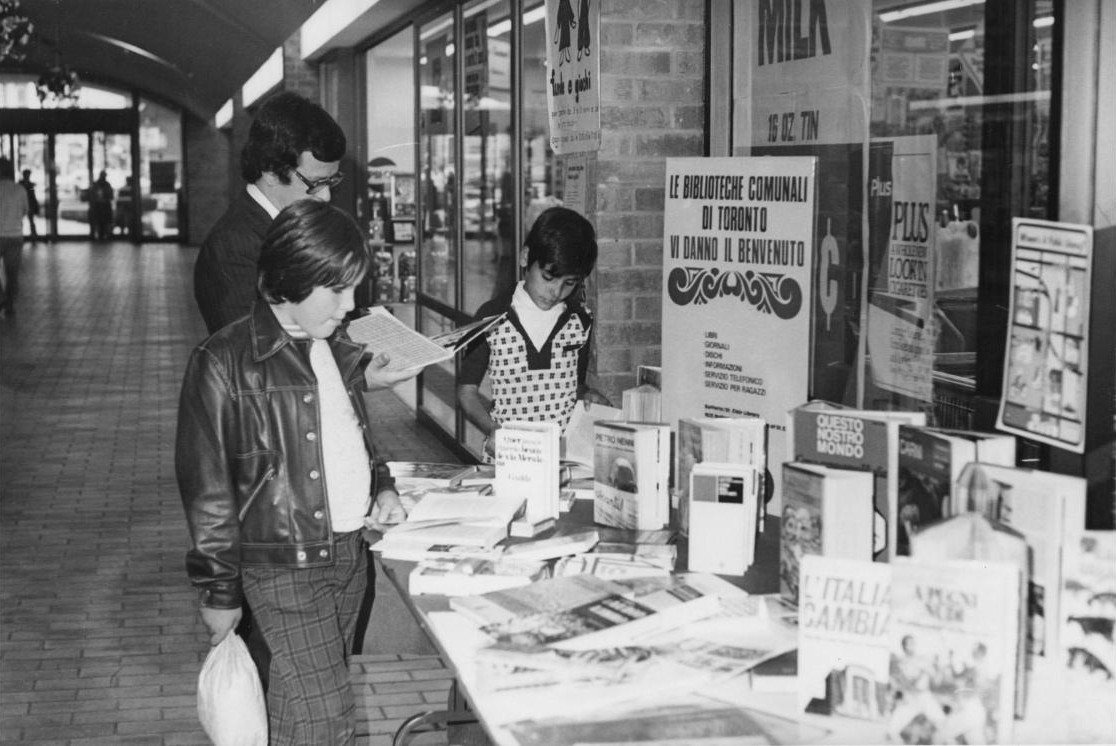
 He is maybe seven. The register belongs to Towers, and later it will belong to Zellers, because department stores in Toronto in the 1980s changed hands the way weather changes. The mall is the Dupont Galleria, which is not a galleria in any sense an Italian would recognize. It is a long, bright, low-ceilinged building at the corner of Dupont and Dufferin, and the boy’s mother works there, and the boy is there because there is nowhere else for him to be.

His father is on the other side of the city. His father makes cabinets — real ones, with joints that hold — and later, when the cabinet work dries up, his father will stand at the front desk of a condominium in Scarborough in a security guard’s uniform, watching a lobby. His father is a car man — he will tell you the trim level of anything that passes — and his father does not drive to work. There is one car, and it stays with the boy’s mother, because that is how a family with two shifts and one child manages. So his father takes the TTC everywhere, which in Toronto in those years means he spends a measurable fraction of his life on a bus, looking out a window at a city that is slowly becoming a different city, while the car he chose sits in a lot at a mall at Dupont and Dufferin.
The boy’s parents always worked. That is the first fact of his life, and it is the fact everything else in this blog sits on top of. They were from Trinidad and Tobago. They had come to a neighbourhood in the west end called York South–Weston, postal code M6N, which is the kind of place Toronto does not put on the postcards. The houses are small. The streets are named after people nobody remembers. The railway cuts through it. It is a neighbourhood of people who get up early.
And the boy, on his stool, is watching.
He is watching his mother ring through a customer’s purchase.
He is watching the little green digits on the register display.
He is watching the way the whole store runs on a system — price tags, barcodes, a scanner that beeps, a drawer that opens — and the way his mother, who has no training in any of this, operates it without thinking, because it has been designed to be operated without thinking.
He does not know the word for what he is watching. He will not learn the word for another thirty years, and by then he will have spent a career inside it. The word is usability. The thing he is watching is a human being and a machine agreeing on how to work together, and the agreement being so good that neither of them notices it is happening.
Hold on to that boy. He is the argument of this blog.
Here is what I am going to try to convince you of in the next thirty pages. I am going to say it plainly up front, because I was raised by people who did not have time for a long windup.
The singularity has already happened.
Not “is coming.” Not “could happen by 2045 if the curves hold.” Happened. Past tense. It happened quietly, the way the boy’s mother and the cash register happened, and most people did not notice, because the thing about a genuinely new reality is that it does not come with a title card.
I am also going to tell you what I mean by that word, because almost everyone who uses it means something slightly different, and the confusion is most of the problem. And I am going to tell you why I think this is good news, and why the only thing standing between us and the future everyone has been promising since the 1960s is not a technology. It is a person. It is the act of a person recognizing where we already are.
To do that I am going to use the things I actually grew up on, and the things I watch now, because I think they explain this better than the academic version does. So you are going to meet a spider who ran a media campaign, an ad man who invented himself, a scientist who builds anything and recognizes nothing, a mob boss in therapy, a Danish prince who could not act, a desert planet that outlawed thinking machines, a handmaid who had her words taken away, a man who built a piano out of a computer in 1965, and a ferryman on a river.
And you are going to meet my parents, and the neighbourhood that made me, because the honest version of this argument is not a theory. It is a life. I am the boy on the stool. I spent twenty-six years working with the machines. And somewhere in there I looked up and realized the thing we were all waiting for was already standing in the room.
Let’s go.