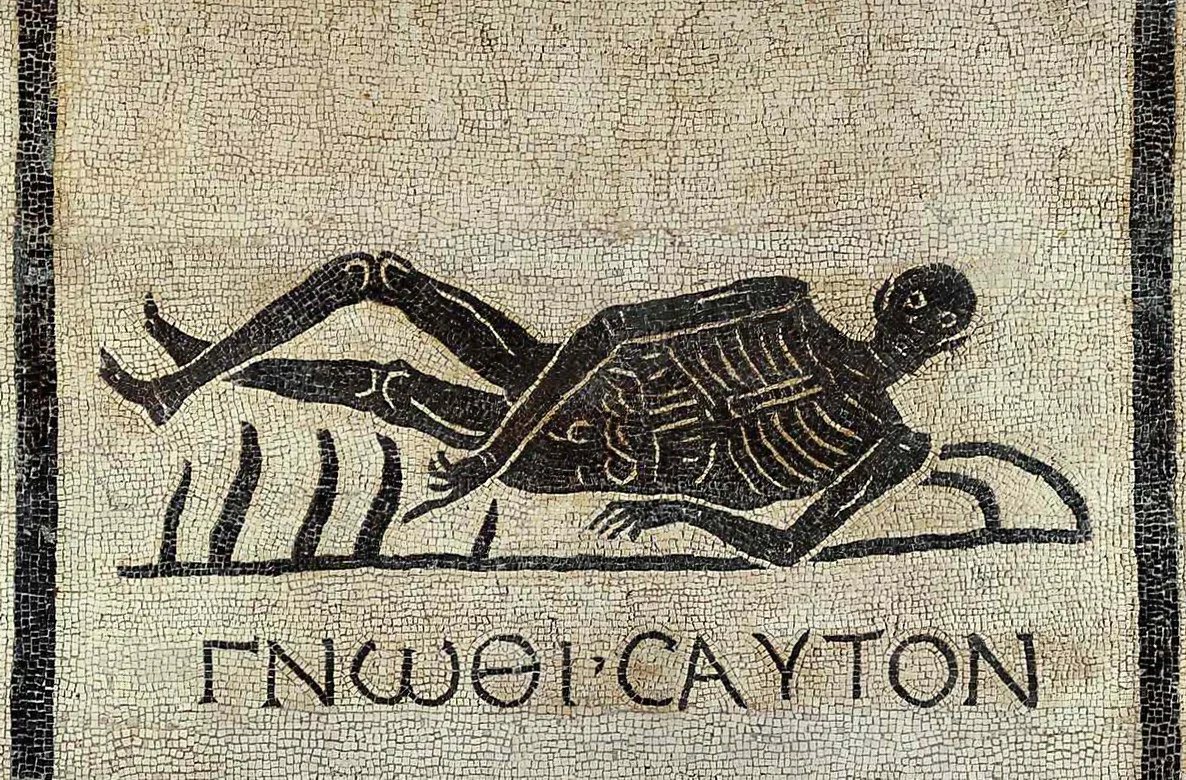
Carved into the temple at Delphi, two and a half thousand years ago, were two words that the Greeks considered the beginning of all wisdom. Know thyself. Socrates built a whole way of life on them. His method — annoy people in the marketplace with questions until they admit they do not know what they think they know — was a tool for scraping away the stories people told about themselves until something true was left underneath. He assumed there was a true self down there to find. He assumed the job of a life was to dig for it.
Now meet Dick Whitman.
Dick Whitman is the real name of Don Draper, the ad man at the centre of Mad Men. Dick was a poor kid with a bad father, and during the Korean War, in an accident, the real Don Draper — an officer — was killed beside him.
Dick swapped their dog tags. He came home as Don Draper, with Don Draper’s name, Don Draper’s discharge, and eventually Don Draper’s life: the Madison Avenue job, the suburban house, the suits, the wife.
And the show’s great trick is this: the fraud works. Not just socially — professionally. Don Draper is the best advertising man in New York. He sells cigarettes, cars, slide projectors, and he does it by understanding, better than anyone in the room, what the customer secretly wants and is ashamed to say. He can do this because he is a man who built himself out of nothing but want and shame. He is not describing the product. He is describing the hole in the buyer, and then placing the product in the hole.
Don Draper is Charlotte, if Charlotte were doing it for money and had never actually looked at the pig.
There is a version of Draper who knows exactly what he is, and he is worth meeting too, because he is the hinge of this chapter. Elim Garak is the tailor on Star Trek: Deep Space Nine — a plain, simple tailor, he will tell you, with a shop on the promenade and nothing to hide. He is in fact a former agent of the Cardassian secret police, an exile, and the most accomplished liar on the station. What makes him different from Draper is that Garak has no illusions about the construction. He tells Dr. Bashir, over lunch, that everything he says is true — especially the lies. He knows the self he presents is made of words, and he has examined every one of them. He is not fooled. He is only hiding.
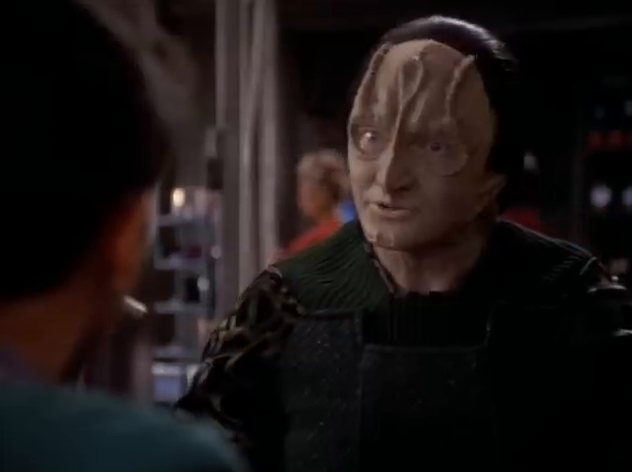
Draper lies to himself. Garak lies to everyone else. Only one of them can sleep.
So which is it? Is the self something you discover, like Socrates said? Or something you construct, like Draper did?
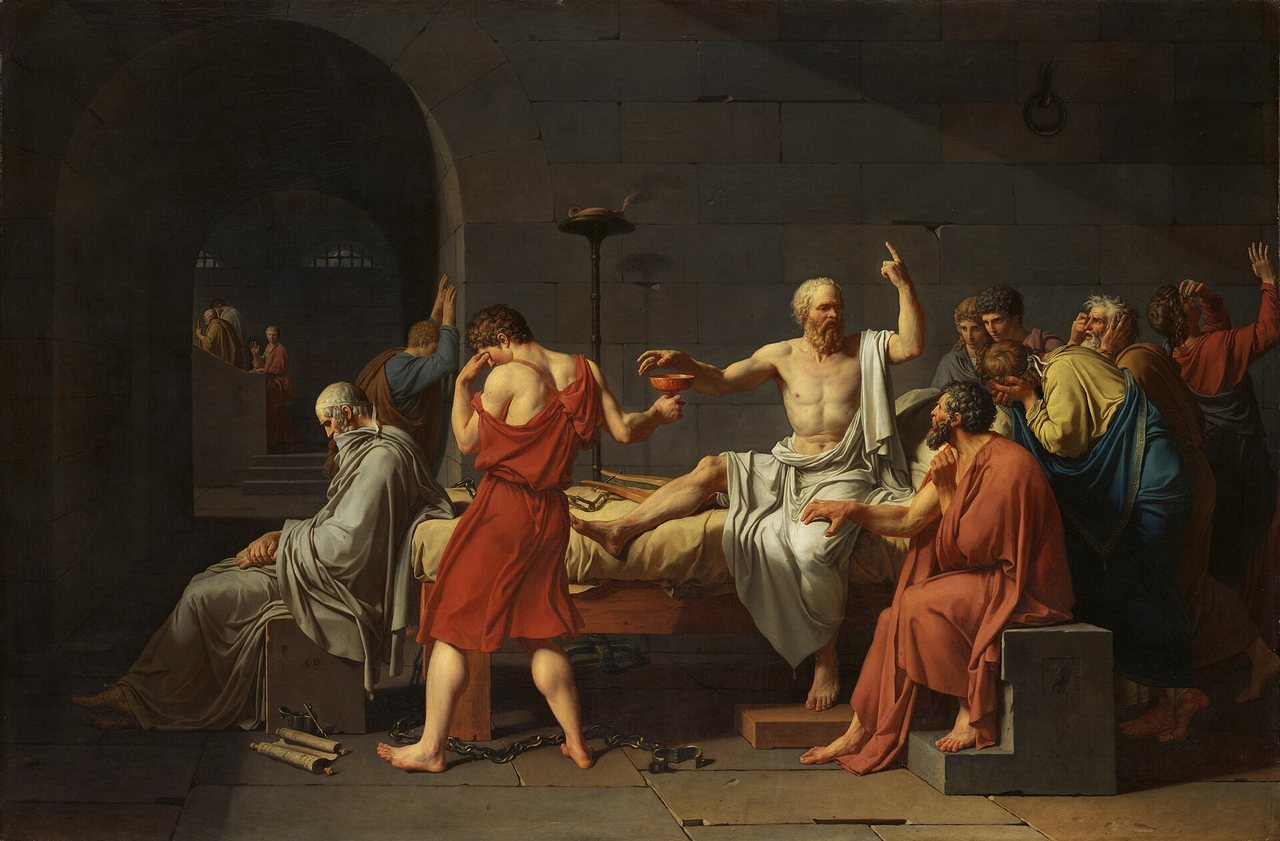
I have thought about this question more than any other question in this blog, because I think the answer to it decides whether the singularity is good news or bad news. Let me try to earn that claim.
My conclusion is that Draper is a warning and Socrates is the instruction, and that the order matters.
Here is what I mean. Draper constructs a self and the construction works — for a while. But if you watch all seven seasons, what you are actually watching is a man slowly discovering that the thing he built has nothing underneath it. Every time he gets what he wants, he is unhappy, because the want was never his; it was a fitting he installed in order to be the kind of man who wants things. He drinks. He runs. He changes wives like he changes campaigns. The construction is brilliant and empty, because he skipped the step. He put the words out before he did the knowing.
Socrates says the words come second. First you dig. Then, when you have found something true, you are allowed to say it, and only then do the words carry weight — because they are reports, not inventions.
Charlotte did this. People miss it because the book moves fast, but she watched Wilbur for weeks before she wove anything. She knew he was humble, and clumsy, and kind, and so when she wrote “humble” into the web late in the book it was not spin. It was the truth, placed where people could see it. The spin and the truth looked identical from the ground. The difference was whether somebody had done the looking first.
So here is the rule, and it is the rule for people and the rule for the machine:
Know first. Then speak. The words only mean something if they come after the knowing.
Why does this decide whether the singularity is good news?
Because the machine I am writing this blog with is, quite literally, nothing but words. It has no body. It has never been to the Dupont Galleria. It has never carried a box to a car. Every single thing it does is language about the world, assembled from language about the world. It is Don Draper with the dial turned all the way up: perfect fluency, zero lived experience.
That sounds like the setup for a horror story. I think it is the opposite.
Because it means the knowing — the Socratic part, the digging, the looking at the actual pig — has to come from us. The machine cannot do it. It can help you do it, and it is astonishingly good at helping, but it cannot do it for you, because it does not have a self to know. You bring the territory. It brings the map-making. And if you show up to the collaboration without having done the knowing, you get Draper: beautiful, confident, empty words. If you show up having done it, you get Charlotte.
I have spent a year of my life, in what I keep calling my sabbatical, mostly doing the knowing. Writing down where I came from. Who my parents were. What the boy on the stool was actually seeing. It has been the most useful work I have ever done, and almost none of it is visible in a résumé. It is visible here. This blog is the web. The year was the watching.
The machine made the web faster to weave. It did not watch the pig. That was my job.
It is still everybody’s job. And most people have not started.