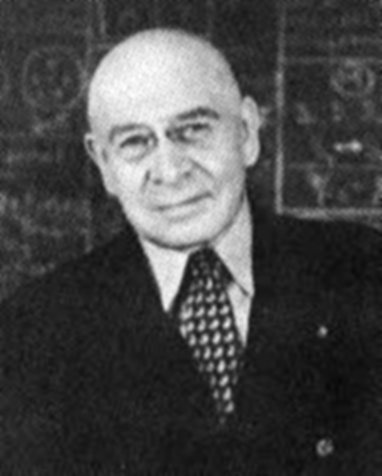
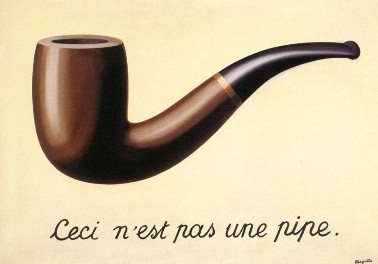
There was a Polish-American count named Alfred Korzybski who, in the 1930s, became obsessed with the idea that most human misery comes from confusing words with things. He called his field “general semantics,” which is a terrible name, and his most famous line was five words long: the map is not the territory.
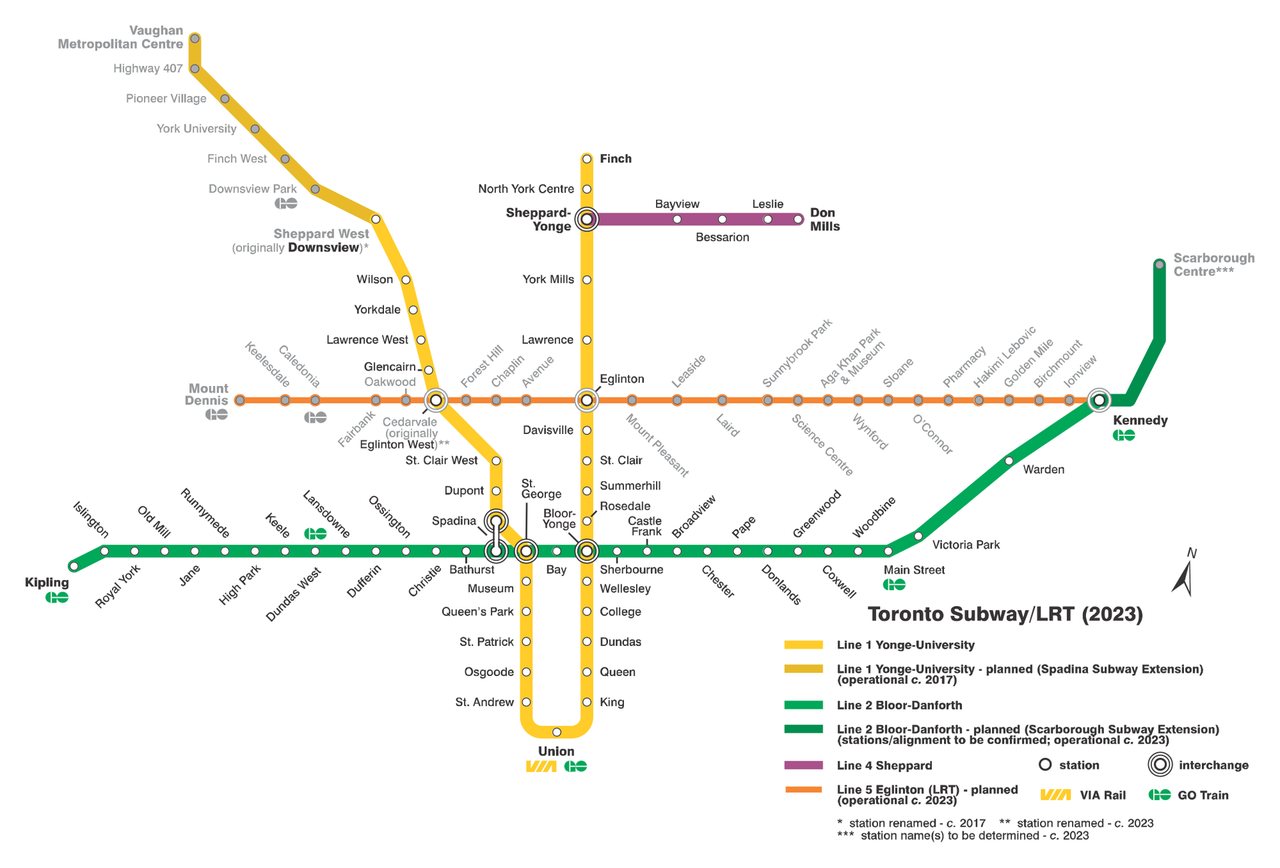
A map of Toronto is not Toronto. You cannot live in it. You cannot take the Eglinton bus in it. It leaves things out — it has to, or it would be the size of the city — and the things it leaves out are the things that actually happen to you on a Tuesday. A map is a tool for a purpose, and the moment you forget that and start treating the map as the real thing, you get lost in a way that is much worse than ordinary lost, because you are certain.
Korzybski thought that nearly every bad argument in history came from two people pointing at the same map and thinking they were pointing at the same territory.
I think that is exactly what has happened to the word singularity.
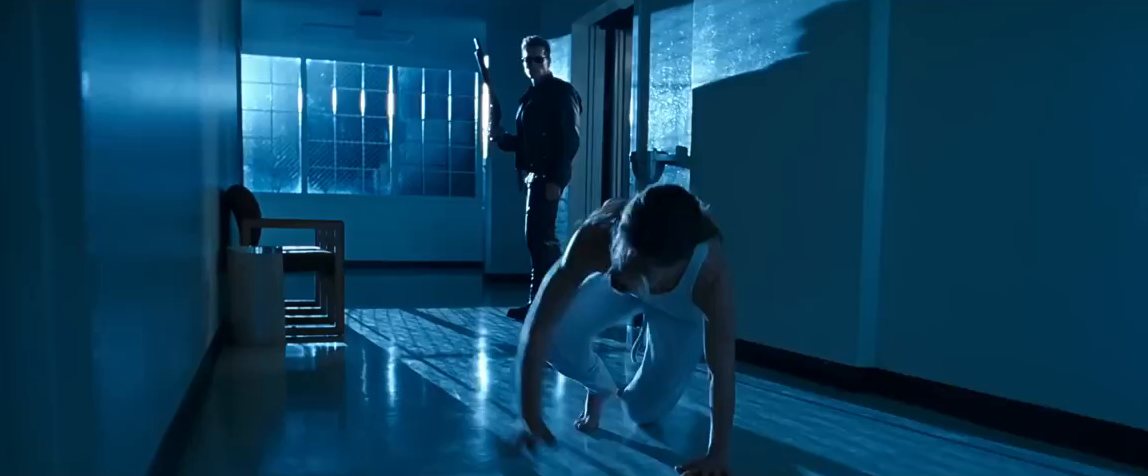
Here is the map most people are holding. The singularity is a future event, somewhere around the middle of this century, when artificial intelligence becomes smarter than humans, starts improving itself, and runs away from us so fast that everything after that point is unpredictable — hence the name, borrowed from the physics of black holes, where the normal rules stop working. Depending on who drew the map, this is either the Rapture or the Terminator. Either we upload our minds into eternal bliss, or a red-eyed robot comes back in time to kill Sarah Connor.
That map has been in circulation since the mathematician Vernor Vinge used the word in a 1993 essay, and it was popularized by Ray Kurzweil, who is going to get his own chapter later because he deserves one. It is a dramatic map. It makes for great movies. And I think it has one major flaw, which is that it describes the singularity as something that happens to us, from the outside, on a date.
Now here is the territory.
Sometime in the last fifteen years — you can argue about the exact year, and in the longer book I do — the human race acquired three things it had never had before, all at once.
First, we figured out how to build a working model of intelligence in software. Not a philosophical model. A practical one: a neural network, a program that learns from examples rather than being told rules, and that gets better the more examples and the more computing power you give it. This was not one invention. It was a pile of inventions, mostly dating from the 1980s, that suddenly started working when the other two things showed up.
Second, we got the computing power. The chips that were designed to draw video games — the GPU in your gaming console — turned out to be exactly the right shape of machine for training these networks. And the chips kept getting cheaper and faster on the schedule they had been keeping since my parents were young.
Third, we got the electricity and the buildings. If you have driven past a new industrial park lately and wondered what the enormous windowless building is, the answer is that it is a data centre, and inside it is the singularity, humming at a steady sixty-eight degrees.
Put those three together, and you get something that was not possible in 2010 and is ordinary in 2026: a machine you can talk to in plain language, that has read more than any human who has ever lived, that can write, draw, reason through a problem, write software, and explain itself. I am writing this blog in collaboration with one. It is helping me find the words. The words are mine; the finding is shared.
That is the territory. That is not a prediction. That is the thing in the room.
So here is my definition, and you can hold me to it for the rest of the blog.
The singularity is the moment the human race gained the programmatic ability to build, train, and scale artificial intelligence. That moment is behind us.
Not the moment the machine becomes smarter than us — that is a side effect, and a fuzzy one, because “smarter” is a map and not a territory too. Not the moment it wakes up. The moment we got the recipe. The moment the ingredients were all in the kitchen.
Think of it like the motor. There was a specific stretch of years in the nineteenth century when humans figured out how to turn fuel into reliable rotation. That was the inflection point. Everything after — the car, the airplane, the washing machine, the factory, the suburb, my father’s bus — was usage. It was people picking up the motor and asking what it could do. The motor did not know it was going to become a Mustang. It just spun.
The neural network is the motor. It does not know what it is going to become either. And here is the part the dramatic map gets exactly backwards: it will not decide. We will. The machine has no wants. It has no agency, in the ordinary sense, until a human grants it some — and I will show you, in chapter five, that the granting happens one checkbox at a time, in software settings menus, by people like me, at work, on a Tuesday.
The runaway intelligence of the old map is a story about something happening to us. The territory is a story about something we are doing. And you cannot see the territory until you put down the map.
The rest of this blog is about putting down the map. And about why, once you do, the first thing you have to look at is not the machine at all.
It is yourself.