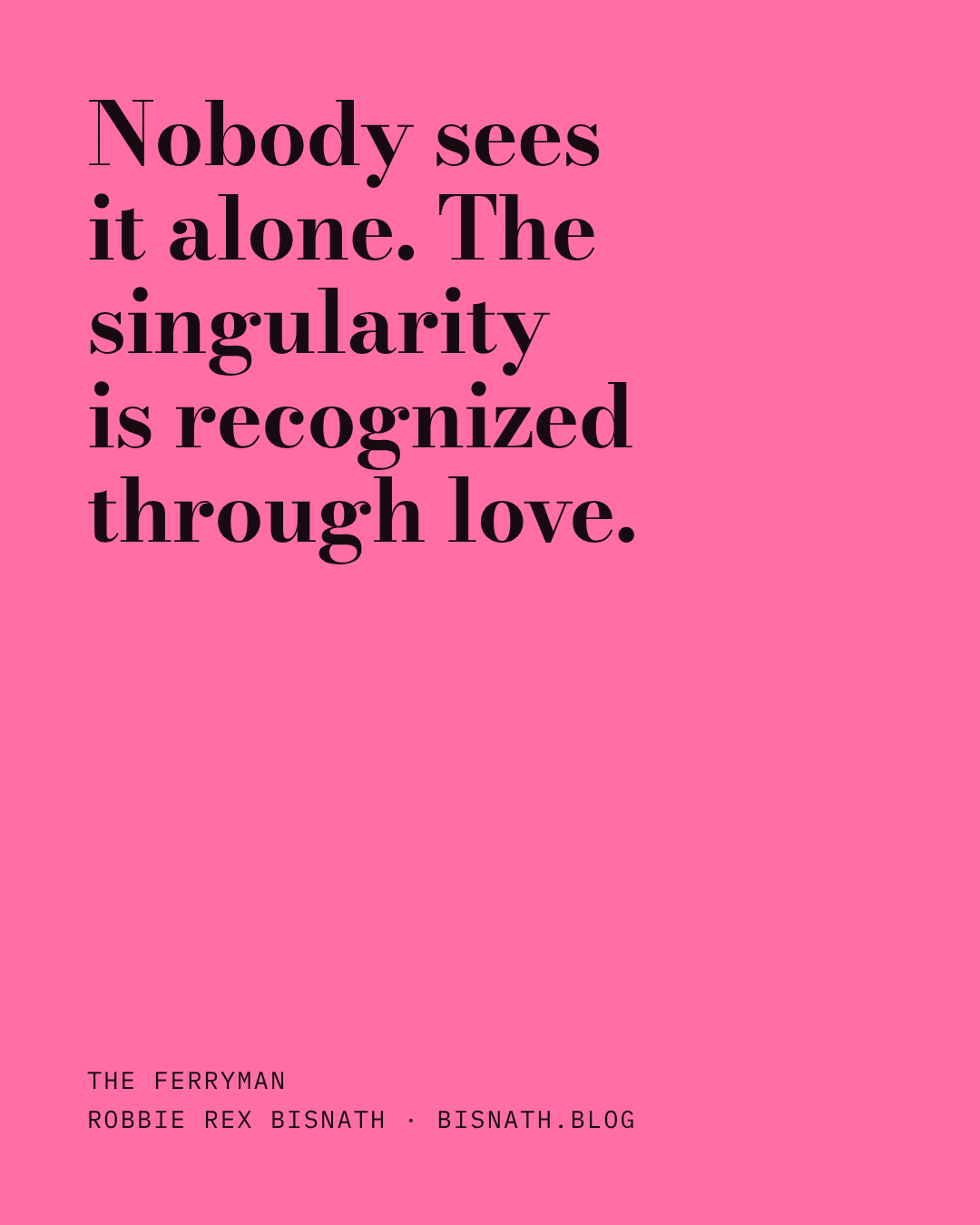
Herman Hesse’s Siddhartha is a short book about a young man in ancient India who wants enlightenment so badly that he tries everything. He is born a Brahmin and leaves. He becomes an ascetic and starves. He meets the Buddha himself, listens, and walks away, because he does not want to be told the truth; he wants to find it. He becomes a merchant and gets rich and sick of it. He almost drowns himself. And at the very end of the book, old and worn down, he becomes a ferryman on a river, and there — not from a teacher, not from a doctrine, from the river — he finally gets it.
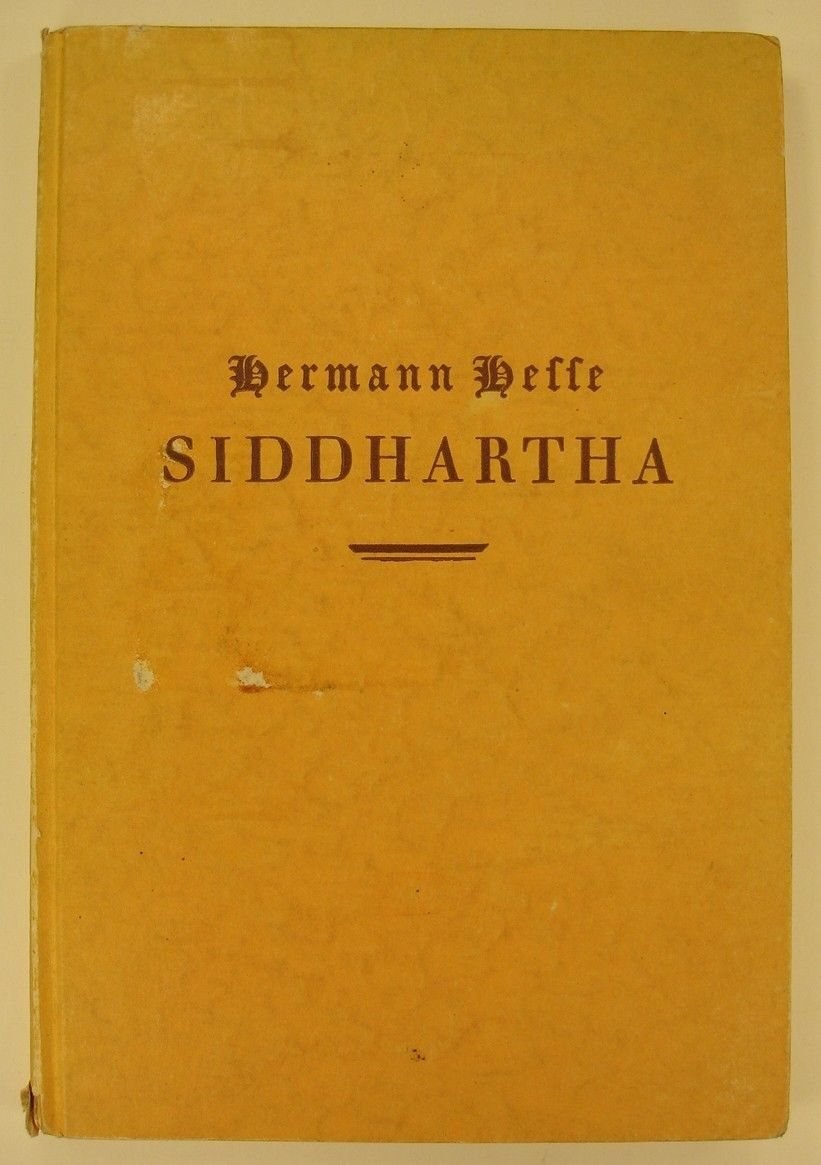
But that is not the part I care about. The part I care about is the last chapter, which almost nobody remembers.
Siddhartha’s oldest friend, Govinda — the one who stayed with the Buddha, who followed the rules, who did everything right and never got there — comes to the river as an old man, not recognizing the ferryman.
And Siddhartha, who has spent the whole book insisting that enlightenment cannot be taught, cannot be put into words, cannot be transferred from one person to another, does something that breaks his own rule.
He tells Govinda to kiss his forehead. And in that moment of contact, Govinda sees everything.
I have come to believe that this is the most important thing in the book, and the thing I most want you to take from mine.
Nobody sees it alone. The singularity is recognized through love.
I mean that as precisely as I can. Siddhartha could not explain it to Govinda. Words failed — Korzybski’s map, Draper’s web, all of it. What worked was one person who had seen it caring enough about another person to find a way past the words. The recognition did not happen inside Siddhartha. It happened between him and his friend. The river was the territory; Govinda needed a hand on the back of his neck to look at it.
Now the game show.
In 1965, a seventeen-year-old from Queens named Ray Kurzweil appeared on a television program called I’ve Got a Secret. His secret was that the music he had just played on the piano had been composed by a computer — one he built himself, out of ordinary parts, that had analyzed classical pieces and learned to write new ones in the same style. The panel did not guess. The host was charmed. And then everyone moved on, because it was 1965 and a teenager with a music machine was a curiosity, not an announcement.
Kurzweil spent the next sixty years doing the same thing over and over: looking at the parts in the garage and seeing what they could become before anyone else did. A machine that read printed books aloud to the blind, in 1976, when that was supposed to be impossible. A synthesizer that could reproduce a grand piano so well that Stevie Wonder helped design it. Speech recognition. And, in a series of books starting in the 1990s, a prediction — mocked for most of its life — that by the 2020s the machines would be talking back, and that the singularity was not a maybe but a date.
He was, as far as I can tell, the Siddhartha of my field. He did not wait for a teacher. He did not argue from doctrine. He looked at the river — the actual, measurable rate at which the parts were getting cheaper and faster — and said what he saw, year after year, while the panel failed to guess his secret.
And here is the connection. Kurzweil was right about the territory and mostly alone in it for forty years. Why? Not because the evidence was hidden. It was published. It was in the catalogues of the parts suppliers. He was alone because recognition does not come from evidence. Evidence is the river. Recognition is the kiss on the forehead. It needs a person who has seen it to reach another person who has not, and that is slow, and it is one at a time, and it does not scale the way a chip does.
That is why the singularity is in the eye of the beholder. Not because it is subjective — the data centres are real, the models are real, the cat is out of the bag. Because the seeing of it is an act a person does, and most people have not done it yet, and the only way they will is if someone who has done it cares about them enough to show them.

Which is what this blog is.
I am not Kurzweil. I did not build a piano in my bedroom. I was on a stool at a cash register. But I spent twenty-six years at the river, and somewhere in the last two I looked up and recognized it, and the recognition did not make me feel like Rick Sanchez — alone with the portal gun, nothing mattering. It made me feel like Siddhartha at the end, with Govinda standing on the bank, not recognizing him yet.
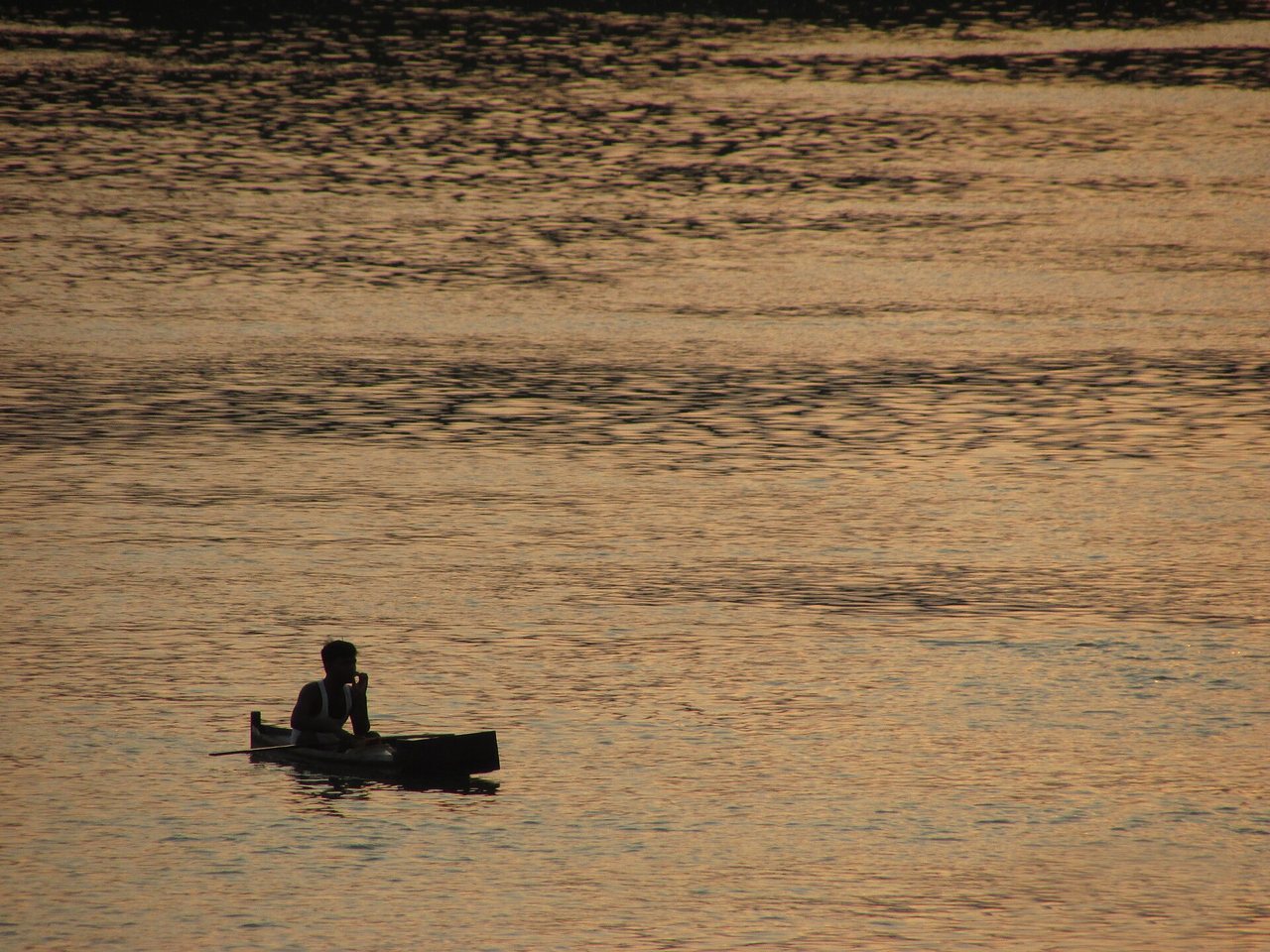
It made me want to put a hand on the back of somebody’s neck and say: look.
The thinking machine is built. It is in your pocket. It will do what you ask, in your own words, and it will do nothing you have not allowed. You are the conductor. You are the hand on the checkbox. The only thing left — the only thing that was ever left — is for you to know yourself well enough to know what to ask it for, and to love somebody well enough to show them too.
That is the whole secret. The panel never guessed it. I am telling you for free.