Two of the great characters in English-language storytelling have the same problem, four hundred years apart, and they fail in opposite directions.
Tony Soprano runs the New Jersey mob. He has panic attacks. In the first scene of the first episode of The Sopranos, he is sitting in the waiting room of a psychiatrist, Dr. Melfi, looking at a statue of a naked woman and wondering what he is doing there. And for six seasons he goes back. He talks. He says things about his mother, his father, his fear, the ducks that landed in his pool and then flew away and left him sobbing. He is, by the standards of men like him, astonishingly willing to look inward.
And he does not change. That is the show’s brutal verdict. He understands himself better and better, and he goes on doing exactly what he did, and the understanding becomes just another thing he knows, like a batting average. In the last season Dr. Melfi reads a study suggesting that talk therapy does not cure sociopaths — it makes them better sociopaths, by teaching them to narrate their own feelings — and she quietly ends his treatment.
Hamlet, Prince of Denmark, has the opposite problem. His father has been murdered by his uncle, who has married his mother and taken the throne. He knows it. The ghost has told him; the play-within-the-play confirms it. And he cannot act. For five acts he examines himself, his motives, the meaning of action, the possibility that the ghost is lying, the nature of death, the question of whether it is nobler to suffer or to fight. He is the most self-aware character ever written. He says so himself — that conscience makes cowards of us all, that the native hue of resolution gets sicklied over with the pale cast of thought. And when he finally does act, it is too late and everyone is dead, including him.
Tony knows and does not change. Hamlet knows and cannot move. Between them they mark out the two ways that “know thyself” goes wrong, and I think both of them matter for the moment we are living through.
The Tony failure is the one I see most in my own industry. Technology people are, as a group, highly self-aware. We have read the critiques. We know about addiction loops and attention economies and bias in the training data. We can narrate it all beautifully, in the same way Tony can narrate his panic. And then we go back to the office and ship the thing anyway, because the knowing has become a feature of our personality rather than a constraint on our behaviour. Dr. Melfi would recognize us.
The Hamlet failure is the one I see in the people who are frightened of the machine. They know a great deal. They have thought about every branch of every outcome. And the thinking has become a substitute for the deciding, so they stand in the castle corridor while the world moves, waiting for a certainty that the territory never provides.
What does neither of them do? Neither of them uses the knowledge. Tony keeps it as a trophy; Hamlet keeps it as a shield. Socrates would say that both have mistaken the first step for the whole staircase. You know yourself in order to act well. The knowing is not the point. The acting is.
I promised at the start that this blog had a moral centre, and this is the chapter where I have to say what it is, because Tony and Hamlet lead straight to it.
Here it is. The people who are in control of this technology — the “we” in “we are in control” — are not the Ricks or the Drapers. They are all of us. And all of us are, to borrow a phrase I have used over and over in my notes, frail and full of flaws. We have guilt. We have regret. We remember things we should not have done and dread things we have not done yet. We dream. We hope for futures we will probably not get. We have something most of us would call a spirit, and some of us would call a soul, and nobody can locate on a scan.
That is who is holding the checkbox. Not a philosopher-king. Not a Vulcan. A person who was up too late and has a mortgage and a mother in the hospital, who ticks the box because the sentence under it sounded fine.
And my whole argument — the thing I will defend in any room — is that this is not a problem to be engineered away. It is the point. The machine has none of those flaws, and it has none of the things that come with them either: no loyalty, no grief, no reason. Tony’s panic attacks are the only honest thing about him. Hamlet’s paralysis is what makes him a person instead of a revenge plot.
The flaws are where the humanity lives.
So the moral centre of the blog is this, and I will say it without irony because my parents raised me without much use for irony: human beings are valuable because of their flaws, not in spite of them, and they deserve love and acceptance on those terms. And whatever we build, the only acceptable reason to build it is to serve those flawed people — to give the tired person with the mortgage a better day. If the technology does not do that, I do not care how smart it is.
The singularity did not happen so that the machine could be impressive. It happened so that a woman at a cash register could get home to her son an hour earlier. If that is not what it does, we built the wrong thing — and the Tony in us will know, and the Hamlet in us will wait, and neither one will fix it.
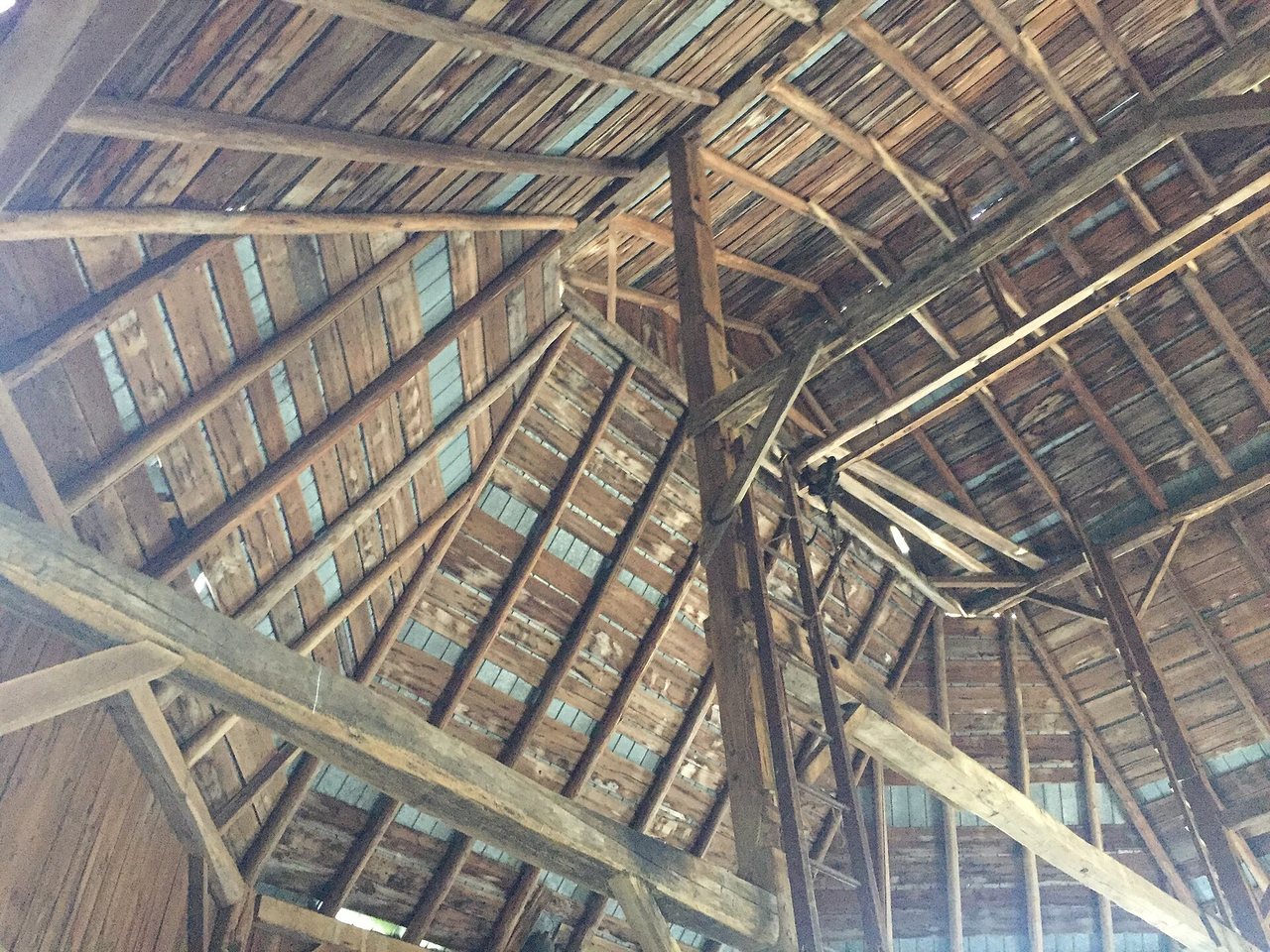
So the task is the third way. Know yourself. Then act anyway, on purpose, for people. The spider did it. The ad man did not. The mob boss could not. The prince would not. And the rest of us are in the barn, looking up at the web, deciding what we are going to read there.